Production Process Technologies
The company “Döwletli-Döwran” takes pride in its modern production process, which enables us to create products that meet international standards. We use advanced technologies, equipment from leading global manufacturers, and local raw materials to produce environmentally friendly and durable ceramic products.
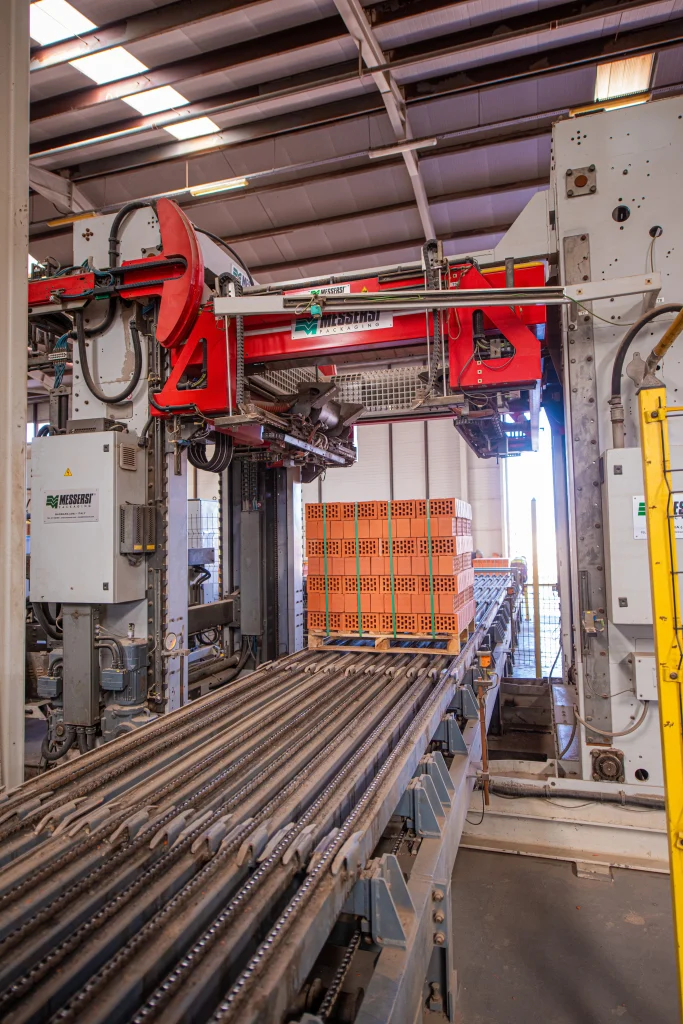
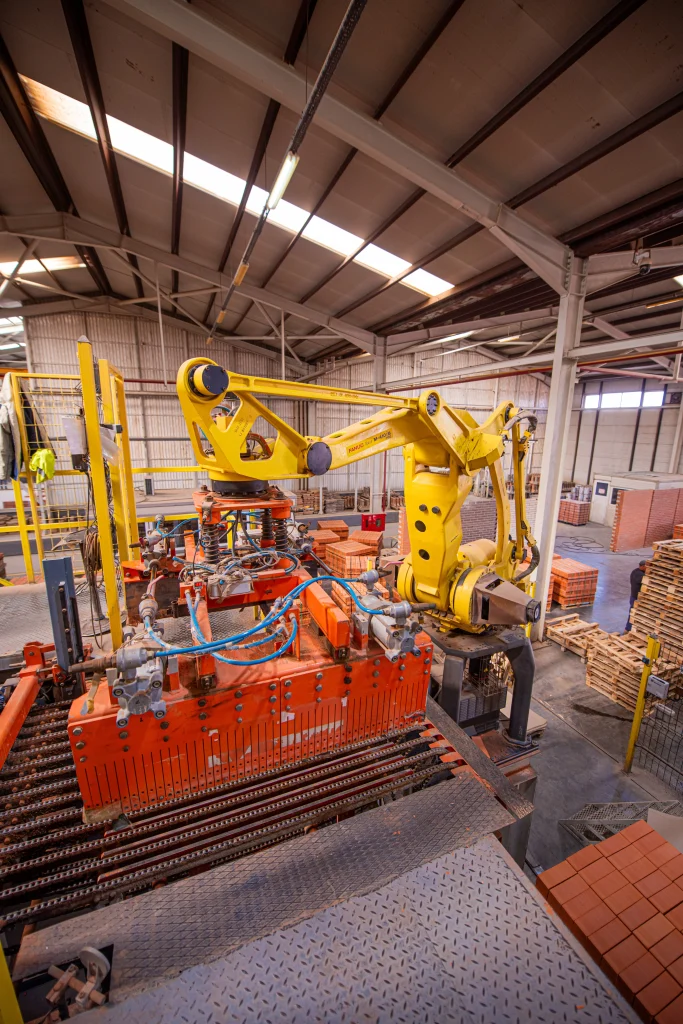
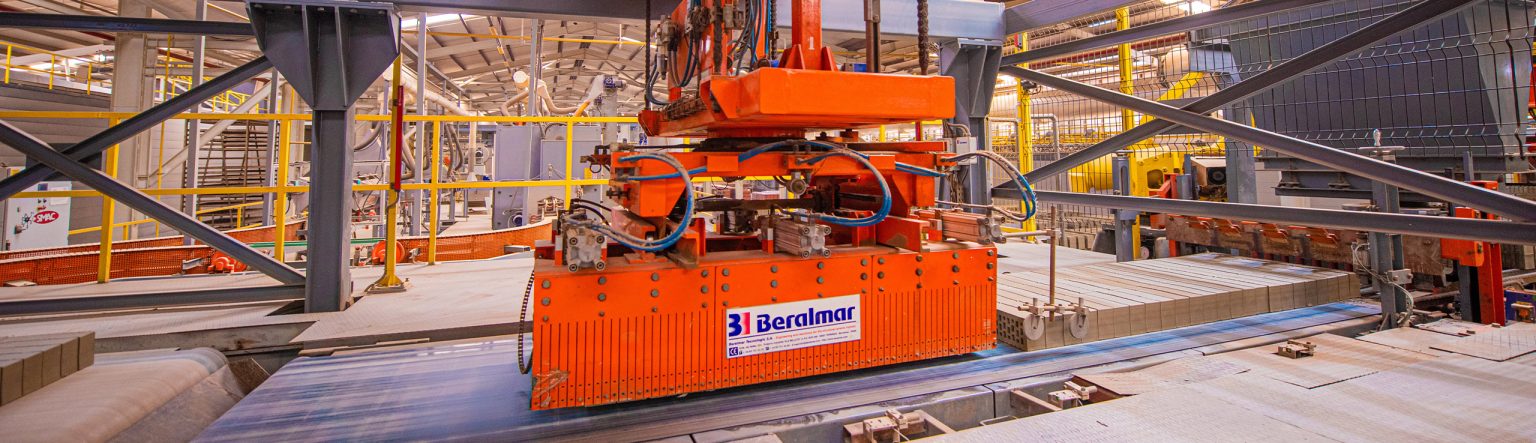
Our production facility occupies 28 hectares of land in the Khalach District of Lebap Province and is equipped with modern equipment from global leaders such as Verdes and Beralmar, as well as technologies from Messersì and Fanuc.
Production Stages
Raw Material Preparation
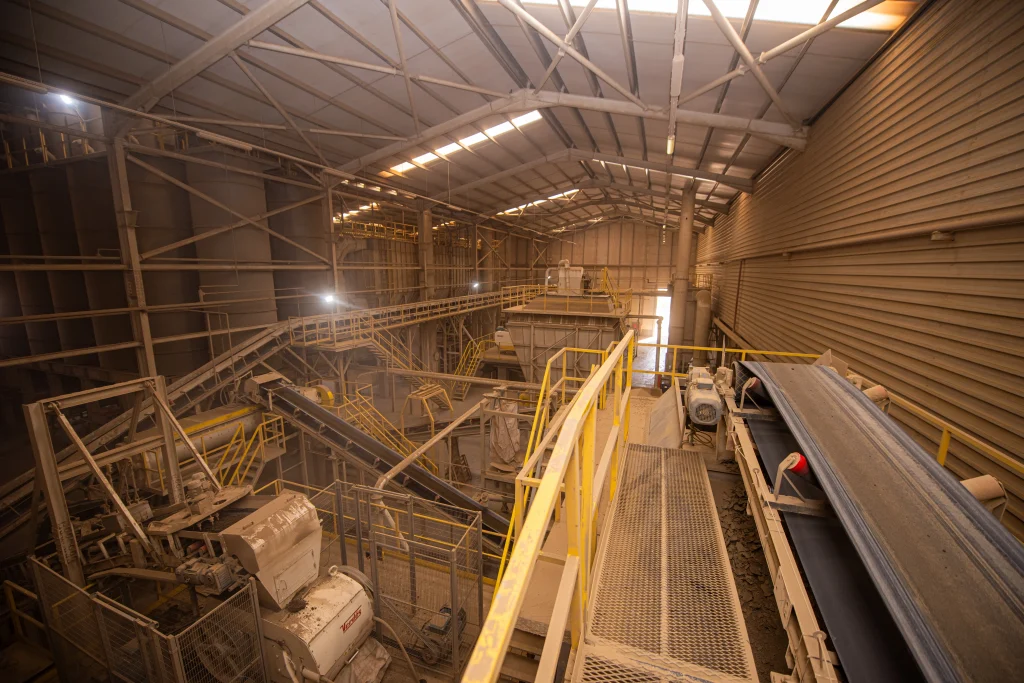
For the production of bricks and ceramic products, carefully selected raw materials are used in accordance with the company’s internal standards. At the first stage, the raw materials undergo incoming inspection and verification of their key characteristics. The material is then cleaned from impurities that could affect the quality of the finished products. After that, the raw materials are sent for preliminary crushing to prepare them for further processing. Next, fine processing is carried out to ensure a uniform structure of the mass.
The prepared mixture is transferred to storage areas, where it is kept until moisture and plasticity are stabilized. High-quality raw material preparation forms the foundation for the strength, precise geometry, and consistent appearance of the final products.
Product Forming
The prepared clay mass is delivered to the forming section through the technological line in a continuous process. Before forming, the material undergoes additional processing to improve uniformity and structural stability.
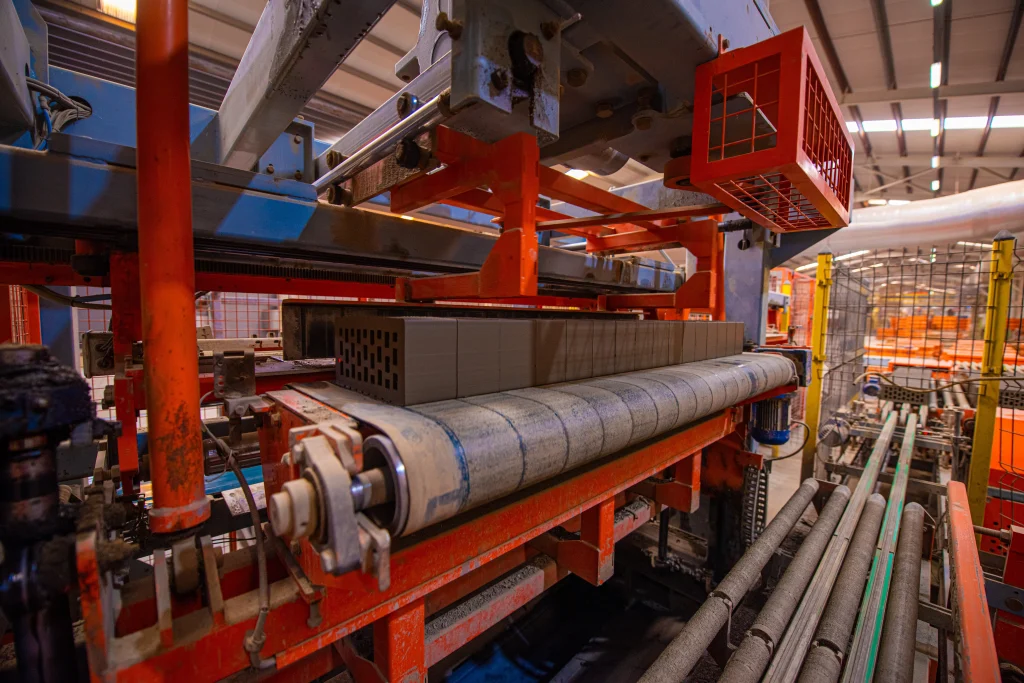
The mixture then enters the extruder, where a profile of the required shape is formed under pressure.
At this stage, the key parameters of the future product are defined: dimensions, density, and geometry. After leaving the forming unit, the material is directed to an automatic cutting system. The equipment cuts the continuous flow into blanks of the required length with high precision. Control of shape and surface quality at the forming stage reduces the risk of deviations in subsequent stages and improves overall batch consistency.
Drying
After shaping, the products are transferred to drying chambers for the gradual removal of excess moisture. Drying is carried out under controlled conditions to preserve the geometry of the blanks and prevent defects. At this stage, temperature, humidity, and air circulation inside the drying zone are automatically regulated. The operating modes are selected according to the product type and the technological parameters of the batch. Uniform drying helps prevent cracks, warping, and internal stresses. The control system ensures process stability and consistent results from batch to batch. After drying, the products reach the required condition for safe firing and further processing.
Firing
Dried products are transferred to the firing section, where they undergo the main thermal treatment.
Firing is carried out in a kiln with sequential passage through technological zones of heating, soaking, and cooling. Throughout the process, the control system maintains the required operating modes and monitors key parameters. Uniform heating forms a strong material structure and ensures stable performance characteristics of the products. At this stage, the products acquire their final strength, durability, and resistance to external influences. Control of the firing режимes also affects color stability and the quality of the surface. Strict adherence to the technology reduces the risk of defects and ensures consistent quality across the entire batch.
Quality Control, Packaging and Shipment
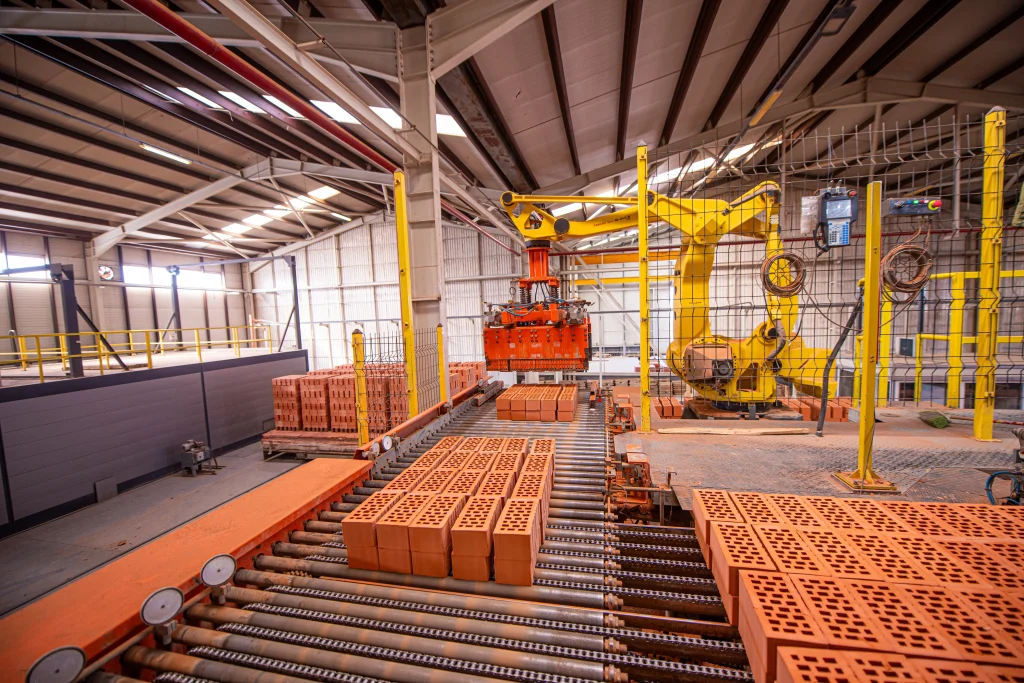
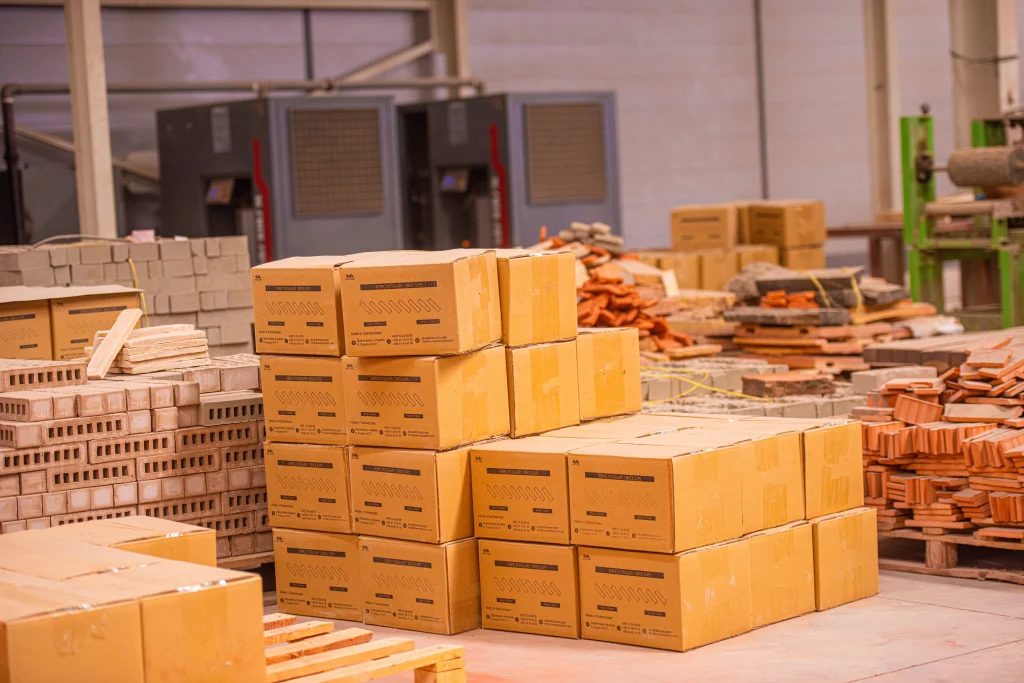
After the completion of the production cycle, finished products undergo final quality control based on key indicators. The appearance, geometry, integrity of the products, and compliance with the company’s internal standards are carefully inspected. Only batches that have successfully passed all inspection stages and meet the required quality parameters are approved for shipment. Afterwards, the products are sorted and prepared for packaging in accordance with established standards. The items are placed on pallets, assembled into transport batches, and securely fixed using packaging materials. Each batch is labeled to ensure convenient accounting, identification, and further logistics handling. This approach ensures the safety of the products during storage and transportation and guarantees consistent and reliable deliveries to customers.
- Automation and Robotics
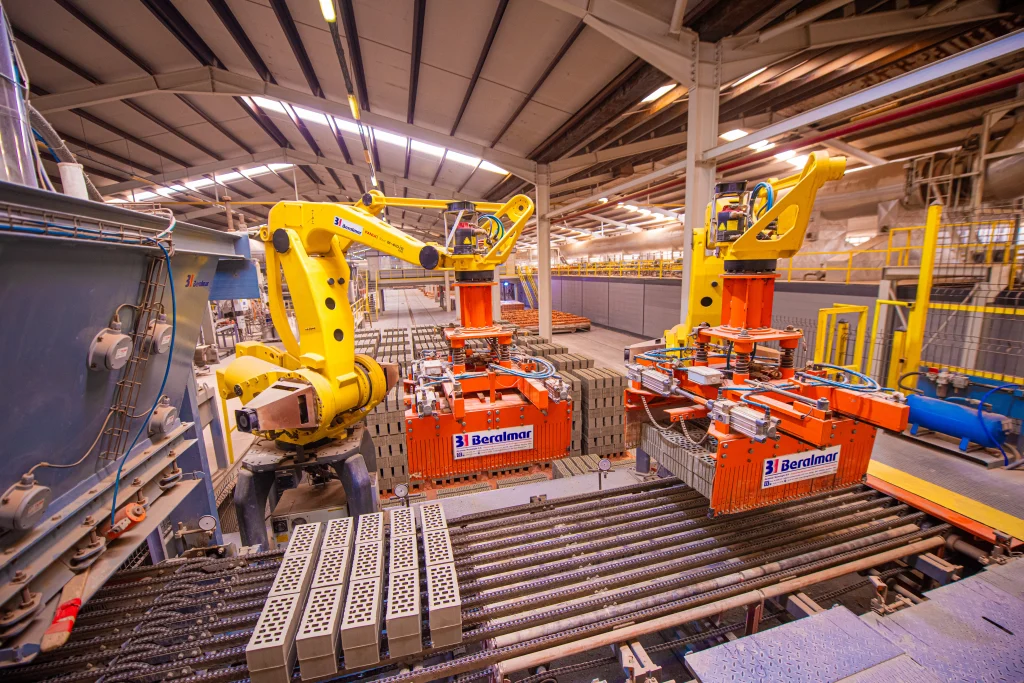
The production cycle is fully automated. Robotic systems are used in the transportation, cutting, stacking, and drying of bricks. All parameters — humidity, pressure, and temperature — are regulated by a centralized control system. This reduces the risk of errors, speeds up the process, and ensures consistent product quality. Intelligent controllers are used in the firing and drying processes, while packaging is carried out using industrial manipulators. Automation allows us to produce goods with minimal tolerances and high repeatability.